Table of Contents (12 sections)
- Understanding Smartphone Technology Trends
- 1. Artificial Intelligence and Machine Learning
- 2. Enhanced Connectivity and 5G
- 3. Foldable and Adaptable Displays
- 4. Integrated Augmented Reality and Virtual Reality
- 5. Eco-Friendly Innovations
- 6. Advanced Security Features
- Glossary
- Checklist before Purchase
- Quick Quiz
Understanding Smartphone Technology Trends
In an era where technology is developing at an unprecedented pace, understanding smartphone technology trends is crucial for consumers and businesses alike. By 2026, smartphones have become more than just communication devices; they are now central to our daily lives, enhancing productivity, entertainment, and even health management. This blog post explores the latest trends that are shaping the smartphone landscape and how they might impact users in the near future.
1. Artificial Intelligence and Machine Learning
Artificial Intelligence (AI) and Machine Learning (ML) are perhaps the most significant trends affecting smartphone technology in 2026. These technologies allow smartphones to learn from user behavior, enhancing user experience through personalization. Features such as voice recognition, image enhancement, and battery optimization are greatly improved with AI. For instance, according to Gartner, 75% of smartphone users reported a significant increase in efficiency thanks to AI-driven applications. This trend is expected to grow, with industry experts predicting that AI will further integrate into features like smart photography, allowing for automatic adjustments based on environmental factors.
Example: Consider how Google Photos uses AI for image sorting and enhancements, making it not just a storage space, but a smart assistant in organizing and editing pictures automatically.
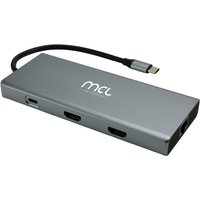
MCL 10-PORT DOCKING STATION HDMI station d'accueil Tablette/Smartphone/ordinateur portable Noir, Gris
Topbiz FR
Sponsored by Guide du shopping

Smartphone Yonis noir 5.7 RAM 2 Go stockage 128 Go
Darty FR
Sponsored by Awin Bruno

2. Enhanced Connectivity and 5G
The rollout of 5G technology continues to revolutionize smartphone capabilities. With download speeds up to 100 times faster than 4G, users can stream movies, download games, and participate in high-quality video calls with minimal latency. As of 2026, over 80% of smartphone users are accessing the internet via 5G networks, which is transforming online experiences significantly.
Importance: Industries such as telemedicine and remote work have thrived due to enhanced connectivity, allowing professionals to perform tasks that were previously impossible due to bandwidth constraints. Looking ahead, the integration of multiple devices into 5G networks will foster innovations such as cloud gaming and immersive AR experiences, pushing smartphone capabilities even further.
3. Foldable and Adaptable Displays
The innovation of foldable smartphones has created a shift toward devices that prioritize not only functionality but also portability. With manufacturers investing heavily, the global foldable smartphone market was expected to reach $29 billion by 2026. Devices featuring adaptable displays allow for seamless transitions from phone to tablet, offering specific use cases for professionals and creatives alike.
Example: Samsung's latest innovations in this area demonstrate how foldable screens can enhance productivity, granting users the ability to multitask efficiently on a larger interface without needing to carry multiple devices.
Comparison Table: Foldable vs. Traditional Smartphones
| Criteria | Foldable Smartphones | Traditional Smartphones | Verdict |
|---|---|---|---|
| Portability | High | Moderate | Foldable wins |
| Multi-Tasking | Excellent | Good | Foldable wins |
| Durability | Moderate | High | Traditional wins |
| Price | High | Moderate | Traditional wins |
4. Integrated Augmented Reality and Virtual Reality
Augmented Reality (AR) and Virtual Reality (VR) integration in smartphones has reached new heights in 2026. Brands are leveraging AR for various applications, from gaming to education and home design. Approximately 60% of smartphone users have engaged with AR applications on their devices. For example, apps that allow users to visualize furniture in their homes before purchasing have become commonplace.
Importance: This trend points toward a more interactive and immersive experience, revolutionizing how users engage with content and products. The predicted future growth of AR-enabled e-commerce implies that consumers will increasingly rely on smartphones for informed buying decisions.
5. Eco-Friendly Innovations
With growing concerns over climate change, the smartphone industry has emphasized eco-friendly practices. Brands are now focusing on sustainable manufacturing practices, such as recyclable materials, reducing waste, and enhancing battery life without harmful components. Reports indicate that about 50% of consumers in a recent study expressed a preference for brands committed to sustainability.
Examples: Companies are creating biodegradable phone cases, and smartphones are being designed with longevity in mind, minimizing electronic waste. As we move forward, this trend is likely to gain momentum, aligning with consumer priorities and global sustainability goals.
6. Advanced Security Features
In 2026, data privacy and security have never been more critical, prompting manufacturers to incorporate advanced security features in smartphones. Biometric security—like facial recognition and fingerprint scanning—has improved significantly, providing users with safer ways to protect their devices. Following reports that cyber threats have surged by 35% over the last two years, companies are emphasizing the necessity of these innovations to protect user data.
Importance: The rise of features such as end-to-end encryption and AI-driven threat detection means that users have greater assurance of their data's safety. Future smartphones may even incorporate blockchain technology, further enhancing security protocols.
Glossary
| Term | Definition |
|---|---|
| 5G | The fifth generation of mobile networks, characterized by faster speeds and lower latency. |
| AI | Artificial Intelligence; technology capable of learning and performing tasks typically requiring human intelligence. |
| AR/VR | Augmented Reality and Virtual Reality; technologies that enhance or simulate the world around the user. |
Checklist before Purchase
- [ ] Consider the AI features that enhance usability.
- [ ] Ensure 5G compatibility for future-proofing.
- [ ] Look for foldable designs if portability is a priority.
- [ ] Evaluate AR/VR capabilities for immersive experiences.
- [ ] Research sustainability ratings of brands.
Quick Quiz
> 🧠 Quiz rapide: What is the main advantage of 5G technology in smartphones?
> - A) Higher Battery Life
> - B) Faster Internet Speeds
> - C) Bigger Screen Size
> Réponse : B — 5G offers significantly faster internet speeds compared to previous generations.
📺 Pour aller plus loin: Understanding Augmented Reality in Smartphones, a deep dive into the AR trends in mobile devices. Recherchez sur YouTube : "smartphone AR trends 2026".
📺 Pour aller plus loin : smartphone AR trends 2026 sur YouTube
Recommended products
Selected by our experts
MCL 10-PORT DOCKING STATION HDMI station d'accueil Tablette/Smartphone/ordinateur portable Noir, Gris
Topbiz FR
A docking station is essential for expanding your smartphone's capabilities, especially for multitasking and connectivity.
Sponsored by Guide du shopping
Smartphone Yonis noir 5.7 RAM 2 Go stockage 128 Go
Darty FR
This smartphone offers impressive features that align with the latest trends, making it a solid choice for tech enthusiasts.
Sponsored by Awin Bruno
Etui Smartphone KITRIE Marron en cuir
3 Suisses FR
An adaptable telescope that can connect to your smartphone enhances your experience in exploring stars and planets.
Sponsored by Guide du shopping