Table of Contents (23 sections)
In the rapidly evolving landscape of technology, smartphone innovation has become a crucial focal point for manufacturers, developers, and consumers alike. As we delve into 2026, several smartphone technology trends are emerging that promise to redefine our interaction with these essential devices. This article explores these trends, highlighting their importance and implications for the future.
Trend 1: Foldable Smartphones Become Mainstream
Foldable smartphones have transitioned from a niche market to a mainstream option that brands like Samsung and Huawei have invested heavily in. These devices not only offer larger screens in compact formats but also enhance user multitasking capabilities. For example, the design evolution, such as Samsung's Galaxy Z Fold, demonstrates how manufacturers are creating devices that can adapt to users' needs. According to IDG research, the foldable smartphone market is expected to grow by 50% annually through 2026, as consumers increasingly prioritize portable utility alongside screen size.
Importance and Predictions
The significance of this trend lies in its potential to revolutionize how content is consumed and created, enabling functionalities like split-screen gaming and video editing on-the-go. The forecast suggests that by 2026, foldables will comprise nearly 25% of all smartphone sales, indicating a robust acceptance among users.
Trend 2: AI-Powered User Experiences
Artificial Intelligence (AI) continues to augment smartphone technology, making devices more intuitive and responsive. By 2026, advancements in machine learning are expected to enhance features such as camera capabilities, predictive text, and personalization. One noteworthy development is the incorporation of AI in camera systems, enabling functionalities like enhanced low-light photography and real-time scene optimization.
Examples
Brands like Google are iterating on this concept with features such as the Night Sight mode, which utilizes AI to improve low-light photography. Furthermore, AI-driven virtual assistants are becoming more context-aware, significantly enhancing user engagement. A recent survey by Statista revealed that 75% of smartphone users would prefer devices that utilize AI for personalized experiences.
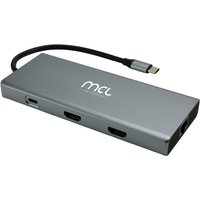
MCL 10-PORT DOCKING STATION HDMI station d'accueil Tablette/Smartphone/ordinateur portable Noir, Gris
Topbiz FR

Trend 3: Enhanced Security Features
As cyber threats grow more sophisticated, smartphone manufacturers are ramping up their security protocols. 2026 has seen advancements in hardware-based security layers that make it far more difficult for unauthorized users to gain access. Features such as biometric authentication, including facial recognition and dual-fingerprints, will become standard.
Data-Driven Insights
A report from Gartner indicates that 30% of new smartphones will include advanced biometric systems by 2026. The importance of securing sensitive data cannot be overstated, especially given the rising concerns around privacy. This trend not only safeguards users but also enhances the overall value proposition of smartphones.
Trend 4: Sustainable Practices in Smartphone Manufacturing
The rising awareness around environmental issues has prompted smartphone manufacturers to adopt more sustainable practices. In 2026, companies are increasingly utilizing recycled materials in their devices and packaging, addressing growing consumer demand for eco-friendly products. Notable examples include Apple's use of recycled aluminum in their iPhone models.
The Future of Sustainability
The trend is not merely ethical; it is also driven by economic benefits as consumers are willing to pay more for sustainable products. A report by Nielsen indicates that 66% of consumers are willing to pay more for sustainable brands. By 2026, sustainability is expected to be a key differentiator in smartphone marketing strategies.
Trend 5: 5G and Beyond: The Connectivity Revolution
Since the rollout of 5G technology, smartphones have seen unprecedented enhancements in connectivity. This trend not only supports faster download speeds but also paves the way for innovations in the Internet of Things (IoT). By 2026, it is predicted that nearly 60% of smartphone users will rely on 5G connectivity for everyday applications, from streaming high-definition content to augmented reality applications.
Market Expansion
As Qualcomm and other companies expand their 5G services, new use cases will emerge, making smartphones integral to our connected lives. The market for 5G smartphones is expected to surpass 1 billion devices sold by 2026, with implications for industries ranging from gaming to telehealth.
Evaluation
The rise of 5G has already started reshaping the competitive landscape, influencing consumer choices based on connectivity features. The influence of this trend is vast, with industries adapting to implement 5G-related capabilities.
Practical Steps for Consumers
How to Choose the Right Smartphone in 2026
When considering the rapid advancements in smartphone technology, it’s essential for consumers to make informed choices. Here are some practical steps:
- Assess Your Needs: Determine what features are most important to you, whether it’s camera quality, battery life, or processing power.
- Stay Informed: Regularly read tech reviews and consumer reports from trusted sources.
- Compare Models: Create a side-by-side comparison of potential options to evaluate their strengths and weaknesses.
- Consider Future Proofing: Invest in technologies that meet current trends, such as 5G compatibility and AI features.
Conclusion
Staying abreast of these smartphone technology trends is vital for consumers to leverage the benefits while minimizing drawbacks. With exciting advancements on the horizon, the landscape of smartphone technology promises to enhance our connectivity, productivity, and overall quality of life.
What are the most notable trends in smartphone technology for 2026?
- Foldable smartphones have gained popularity.
- AI applications are improving user experiences.
- Security features are becoming more advanced.
How is sustainability impacting smartphone manufacturing?
Sustainability practices, such as using recycled materials and reducing carbon footprints, have become essential in responding to consumer demands.
Why is 5G important for smartphones in 2026?
5G technology enhances connectivity speeds, enabling new applications and services across industries.
What should I look for in a smartphone in 2026?
Consider features like 5G compatibility, AI capabilities, and security enhancements to ensure you choose a device that meets current needs.
Glossary
| Terme | Définition |
|---|---|
| Foldable Smartphones | Devices that feature flexible screens, allowing them to open and close like a book. |
| Machine Learning | A branch of AI that enables a system to learn from experience and improve its tasks. |
| 5G Technology | The fifth generation of wireless technology, promising faster data speeds and more reliable connections. |
Checklist avant achat
- [ ] Évaluer mes besoins en fonctionnalités
- [ ] Suivre les avis des consommateurs
- [ ] Comparer plusieurs modèles
- [ ] Tenir compte de la compatibilité 5G
- [ ] Vérifier la durabilité et l’impact environnemental
🧠 Quiz rapide : What feature do you think is most important in a smartphone today?
- A) Camera Quality
- B) Battery Life
- C) AI Features
Réponse : A — As photography trends rise, camera quality is increasingly emphasized by consumers.
📺 Ressource Vidéo
> For more insights: The Future of Smartphone Technology: Trends to Watch, a comprehensive analysis of emerging smartphone designs and technologies. Search on YouTube: "smartphone technology trends 2026".
📺 Pour aller plus loin : smartphone technology trends 2026 sur YouTube
Recommended products
Selected by our experts
MCL 10-PORT DOCKING STATION HDMI station d'accueil Tablette/Smartphone/ordinateur portable Noir, Gris
Topbiz FR
This docking station is perfect for the increasing versatility of smartphones, allowing users to connect multiple devices seamlessly.
Etui Smartphone KITRIE Marron en cuir
3 Suisses FR
A stylish leather smartphone case that not only offers protection but aligns with trends in aesthetics and sustainability.